ADAS
Starting September 1, 2029, all new passenger cars and light trucks sold in the United States will be required to include Automatic Emergency Braking (AEB) systems. These systems will prevent an estimated 24,000 traffic accidents each year while saving hundreds of lives.
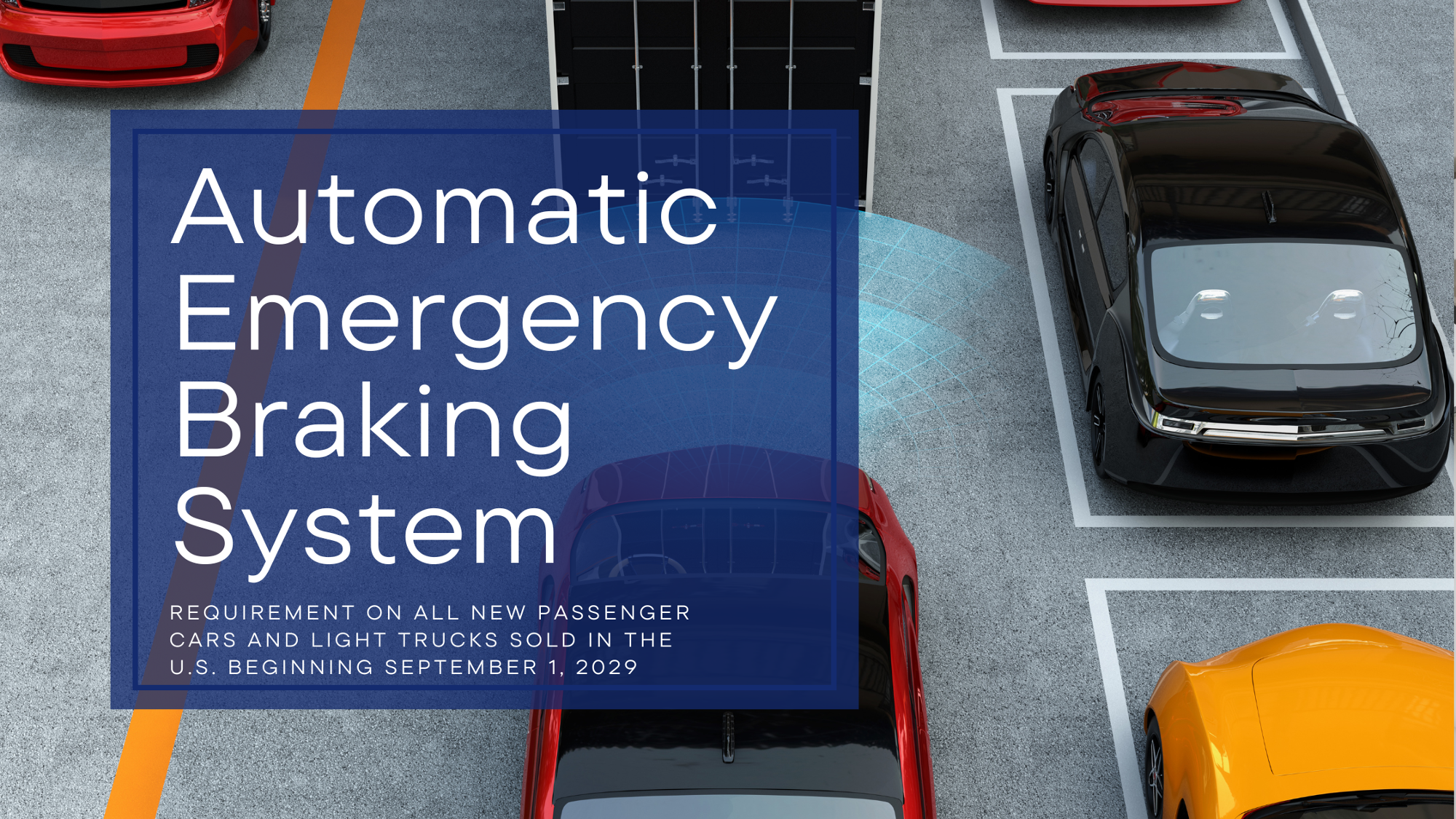
AEB systems required by the National Highway Traffic Safety
Administration (NHTSA) under 49 CFR Parts 571, 595, and 596 are one of many
safety systems under the larger umbrella of Advanced Driver Assistance System
(ADAS), which auto manufacturers are including on more vehicles they sell.
ADAS are not entirely new innovations; most drivers have
been using them already like cruise control. It is one of the earliest examples
of such a system which has been offered by most auto manufacturers for decades.
In general, ADAS are sensors or systems which are designed to prevent damage to
a vehicle, the driver, passengers, and pedestrians. Modern iterations of these
systems generally leverage radar, LIDAR, cameras and ultrasound to monitor a
vehicle’s surroundings.
These systems include blind spot monitoring, lane departure,
adaptive cruise control, and pedestrian detection. Some of these systems have
functionality required in legislation; in the NHTSA rule above, all vehicles
will be required to detect a stopped vehicle and apply brakes to avoid a
collision at speeds of 62 MPH or lower.
As of January 2026, an estimated 50% of all vehicles on the
road in the United States have one or more ADAS. This percentage is likely to
increase as older vehicles with [HB1] these
systems are retired from regular use. For customers, this will introduce
another system which should grant them peace of mind to reliably get from point
A to point B with reduced chances of an accident.
Some important things to know about ADAS to keep your system
performing in peak condition:
·
These systems require periodic maintenance
·
Driving in adverse conditions can strain ADAS
systems as they stain
[HB2] other
systems on a vehicle
·
Grime that accumulates from day-to-day driving
can, over time, diminish functionality
·
When performing repairs of any other systems,
ADAS systems can lose sensitivity, especially if they have been calibrated to
account for a defect in another system that was repaired
Fortunately, calibration maintenance of these systems are
recommended at higher milage tune ups and are not recommended as often as oil
changes.
Staying on top of trends in ADAS can be challenging, but
that’s why the McGee Company team has semiannual sales training to stay on top
of industry trends and new product development from OE providers.
As we look back, the inclusion of multiple ADAS became more
common among most major auto manufacturers in the late 2010’s and early 2020’s.
As these vehicles have aged into the twilight of their manufacturer’s five to
seven year warranty period, servicing of the ADAS has become a more common
customer request.
Many service shops have found additional revenue streams by including ADAS calibration equipment in their shops alongside other traditional service equipment. Outside of manufacturer’s mileage service recommendations, insurance companies have become more amenable to the inclusion of ADAS calibration as part of auto repairs they cover.
McGee Company works with several industry partners to
provide auto shops with ADAS equipment vital to their success as these systems
become present on more vehicles they will service. This is the next TPMS boom
in revenue generation for tire shops, mechanics, collision services, through
the dealership market and it is coming whether you and your team embrace it or
not!
With federal mandates requiring this, keep business at your
shop. While there are practical concerns
to sizing the right
system for you, you’ll find great solutions from Autel, Hunter, and Cemb.
McGee Company wants to help your business grow and we do
that by bringing industry trends and opportunities your way. Call your rep
today or have them reach out to you below (contact form).